Whoa! This stuff moves fast. I’m biased, but browser extension wallets are where most folks start with DeFi—because they’re easy and immediate. My instinct said to treat any new extension like hot coffee: useful, but handle carefully. Seriously? Yep. Wallet safety is the difference between a smooth trade and a wake-up call.
Okay, so check this out—Rabby is an extension wallet built with DeFi users in mind, not just consumers who want to hold ETH. It focuses on transaction safety, granular approvals, and better UX for interacting with complex dApps. I installed it the first time because I wanted a wallet that helped me avoid dumb mistakes; it did that, though not perfectly. Heads-up: don’t treat it as a hardware wallet replacement—use both when possible.
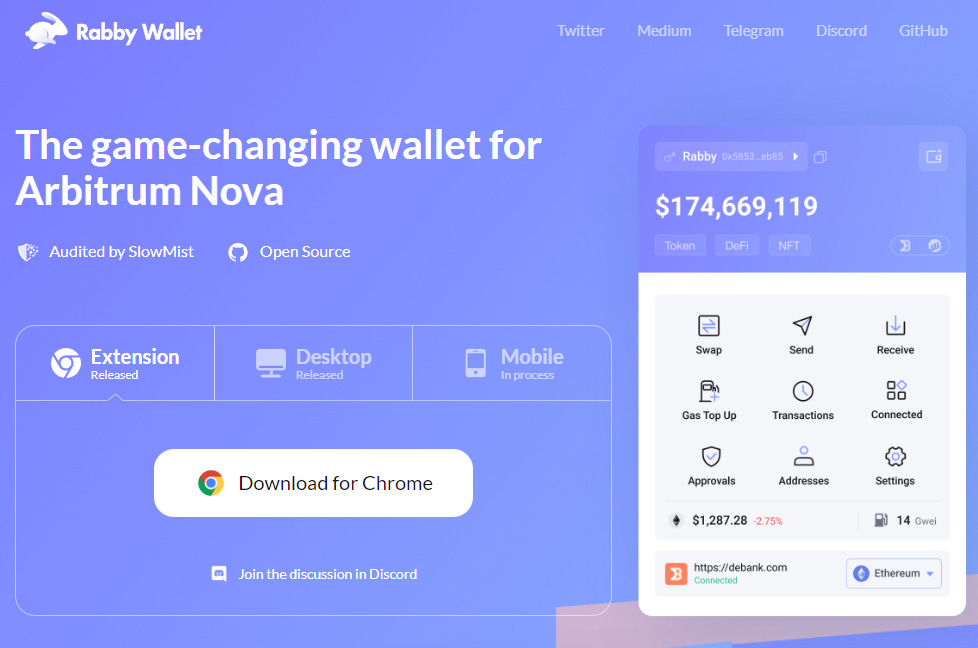
What Rabby Wallet actually gives you
Short version: convenience plus safety-focused features. Medium version: Rabby supports multiple EVM chains, integrates with Ledger for hardware-backed signing, offers a transaction simulator that previews what a swap or contract call will do, and includes a built-in approvals manager so you can revoke token allowances. Longer thought: those features combined reduce common attack surfaces—front-running, accidental approvals, and confusing gas choices—though they can’t eliminate user mistakes or phishing entirely, so you still need to be cautious.
One practical win: Rabby’s token approval controls let you approve specific amounts, not blanket infinite allowances. That sounds small. It matters. I’ve seen people lose funds to malicious contracts because they granted unlimited access. Somethin’ as simple as limiting approvals can save a lot of grief.
How to download Rabby Wallet safely
Don’t rush. Pause. Really. Browser extension scams are everywhere.
Step 1: Go to a trusted source. Use an official channel rather than random download sites. For convenience, you can start here: rabby wallet. That page points to legitimate extension store links and installation guidance.
Step 2: Verify the publisher. On Chrome or Brave, check the extension listing for the developer name, user reviews, and install count. Medium-length tip: read the first couple of reviews and the extension permissions before you click install. Long caveat: even a good-looking page can be mimicked, so cross-check multiple sources—official Twitter, GitHub repo, or X, and developer website—before trusting the download.
Step 3: After install, do a quick sanity check. Open the extension, create a new wallet or connect a hardware device like Ledger, and transfer a tiny test amount before moving larger balances. Double-check the extension icon and name in the toolbar; some malicious clones use subtle misspellings or similar logos. I’m not 100% paranoid, but this part bugs me—so I test everything.
Practical security tips for using Rabby
1. Use a hardware wallet for significant funds. Rabby supports Ledger; pair them. Period.
2. Use the approvals manager often. Revoke what you don’t use. It’s easy, and very very useful.
3. Simulate transactions when the option is available. The simulator isn’t perfect, though it helps you catch weird slippage or unexpected contract calls.
4. Never paste your seed phrase into a website or extension textbox. Never. If a site asks, walk away.
Quick aside (oh, and by the way…)—if you’re connecting to a new dApp, open the dev console and watch for unexpected network requests only if you know what you’re doing; otherwise, keep to trusted dApps. I’m not telling you to be paranoid; call it cautious.
Common pitfalls and how Rabby helps
Problem: Auto-approving infinite allowances. Rabby: granular approvals to limit exposure. Problem: Confusing gas and failed transactions. Rabby: transaction preview and simulation can show whether a contract actually will execute as expected. Problem: Cloned extensions. Rabby: verify publisher and use the link above to get to the correct install page.
There’s no silver bullet. On one hand, Rabby’s features materially reduce risk; on the other hand, human error and clever phishing still get people. Use tools, but keep your head on straight.
FAQ
Is Rabby open-source?
Yes—its codebase and release notes are available on GitHub, so you can inspect updates and see what changed between versions. That transparency matters for trust, though reading code requires technical skill. Still, community audits and activity are good signals.
Can I use Rabby with Ledger or other hardware wallets?
Yes. Rabby supports Ledger integration which lets you keep keys offline while using the extension for transaction orchestration. That combo is my go-to for medium and large balances.
What if I installed a fake Rabby extension—what now?
Remove the extension immediately, change passwords if you used them, and move funds off compromised addresses if you can. If seed phrases were exposed, treat the wallet as compromised and transfer assets to a new wallet created on an air-gapped device or with a hardware wallet. Contact community channels for help, but act fast.